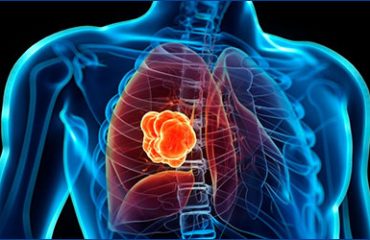

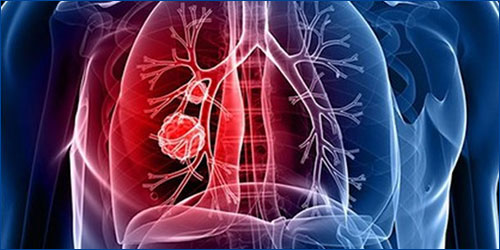
Lung cancer has gone down in world history as one of the most significant diseases of the 20th century. It has been statistically and biologically proven that the most important cause of this disease is smoking. Following the trend of quitting smoking in Western countries, there has been a decreasing trend in the incidence of lung cancer cases, at least in men. In women, deaths from lung cancer have surpassed those from breast cancer. Last year, more than half a million people worldwide were diagnosed with lung cancer, and sadly, a significant proportion of these people (estimated at i) died from the disease.
Until the 1960s, lung cancer was considered a homogenous disease, but it has since become clear that there are two main types: small cell and non-small cell.
Small cell lung cancer was found to be biologically different from other lung cancers, and its treatment has been systemic chemotherapy since the 1970s. Small cell lung cancers are divided into two groups. In the limited stage, the disease is present in the chest cavity, lungs, and lymph nodes. In the extensive stage, the disease has spread to other organs in the body via the bloodstream. One of the most important characteristics of this disease is its tendency to metastasize to the brain.
In limited-stage disease, the best treatment is chemotherapy and radiotherapy. Ideally, the patient should be treated with both chemotherapy and radiotherapy concurrently (the highest cure rate is observed when radiotherapy is added to the treatment in the first 6-9 weeks after the start of chemotherapy, which is around ). However, the side effects of concurrent chemotherapy and radiotherapy are quite numerous and can even be life-threatening. Therefore, it is necessary to carefully select patients who will receive concurrent treatment and to discuss this in detail with the patient. Even without concurrent treatment, some patients may recover with radiotherapy following chemotherapy. The preferred chemotherapy for limited-stage disease is cisplatin and etoposide. It is administered for three days every twenty-one days. In cisplatin administration, it is important to give the patient plenty of fluids intravenously and to monitor urine output. To treat nausea, one of the most important side effects of this treatment, antiemetic drugs should be used (ondansetron in the first 24 hours, granisetron, and a combination of metoclopramide and lorazepam for four days are popular choices). A total of 4 cycles is sufficient. Following the completion of treatment, it is beneficial to monitor the patient regularly with computed tomography (CT) scans. If the disease recurs, it is possible to improve quality of life and prolong survival with medications used in the advanced stage.
In the advanced stage, the primary treatment is chemotherapy. Platinum (cisplatin or carboplatin) and etoposide are used as standard treatments. In selected cases, adding immunotherapy to chemotherapy may positively influence the course of the disease. There is no evidence of benefit in administering more than 4 cycles of treatment, or in providing maintenance therapy after chemotherapy, or even in performing bone marrow transplantation. Irinotecan is the second-best choice when the disease progresses. If the patient's general condition is good, additional treatments may be tried. In this case, some patients may benefit from taxane group drugs (paclitaxel, docetaxel, and finally nab-paclitaxel). While the standard treatment for cases with cerebral metastasis is brain radiotherapy, in cases of small metastases and widespread systemic metastases, it may be possible to start treatment with chemotherapy and achieve a response to chemotherapy in brain metastases as well.
The primary treatment for non-small cell lung cancer is surgery. Determining the stage of the disease before surgery is crucial in choosing the appropriate treatment. For this purpose, PET-CT and brain MRI scans are now required for every patient. However, (in cases where early diagnosis is not possible with annual spiral CT scans for smokers), only of patients are diagnosed at stages suitable for surgery (Stage I or II). Several studies have shown that surgery is ineffective when the disease has spread to the lymph nodes in the mediastinum (Stage III). The only exception is when there is a microscopic metastasis in a single mediastinal lymph node, and the disease can be eradicated by removing one lobe (lobectomy). Therefore, patients should undergo a minor procedure called mediastinoscopy (even if PET-CT results do not show disease in the mediastinum) before the main operation to determine if the disease has spread to the lymph nodes in the mediastinum. Depending on the surgeon's choice, mediastinoscopy can be performed concurrently with the main surgery. In this situation, a pathologist uses a method called frozen section during surgery to determine if there are cancer cells in the lymph nodes in the mediastinum. If cancer is present in more than one lymph node in the mediastinum, the operation is stopped. For many years, chemotherapy drugs were not used in the treatment of non-small cell lung cancers that could not be surgically treated, and these patients were treated with palliative radiotherapy as a last resort.
This article focuses on the application of new chemotherapy drugs in non-small cell lung cancer. of these patients are diagnosed in surgically treatable stages (Stages I and II). of all patients will require new chemotherapy drugs at some point in their disease (due to systemic metastases or local recurrence). Until recent years, it was thought that chemotherapy drugs played no role in the treatment of these patients. After the discovery of cisplatin in the 1970s, it was found to be more effective than previously known drugs in non-small cell lung cancer. Long-term randomized trials have proven that chemotherapy containing cisplatin prolongs life expectancy and improves quality of life. The number of non-small cell lung cancer patients surviving one year thanks to cisplatin-containing chemotherapy has doubled, and even in patients who did not respond objectively to treatment, chemotherapy has been shown to reduce disease symptoms and improve quality of life.
From today onwards, all patients with non-small cell lung cancer (Stage III and IV) who would not benefit from surgery should be considered candidates for chemotherapy.
Chemotherapy can be used in three important ways in these patients:
1. As a neoadjuvant, meaning after diagnosis and before local treatments.
2. As an important part of combined treatment with radiotherapy in locally advanced cancers.
3. In metastatic cases, with the aim of both prolonging life and improving quality of life.
In chemotherapy treatments containing cisplatin, the most significant problem used to be treatment-related nausea and vomiting. Today, thanks to various supportive medications in the serotonin antagonist group (Zofran, Kytril), such nausea is a thing of the past. In addition, the discovery of new drugs that are at least as effective as cisplatin and have fewer side effects has begun to dramatically change lung cancer treatment. Carboplatin, a second-generation sibling of cisplatin, is a drug that is both as effective as cisplatin and has virtually no nausea or kidney side effects.
These drugs have increased the range of medication options available to patients with lung cancer, and in many cases, have made treatment more successful and less damaging in terms of side effects. Below, I will briefly discuss these drugs and their use in non-small cell lung cancer.
Paclitaxel (Taxol) Paclitaxel is one of the most effective drugs found in recent years for lung cancer treatment. It is obtained from a tree found on the Pacific coast. Previously, an average of three trees had to be cut down for one course of treatment. Now, with advanced technology, this drug can be manufactured synthetically, identical to its natural form. Because of this, the drug is quite expensive. However, even when used alone in lung cancer, it shows the highest efficacy ever recorded for a drug. In a second clinical trial, it was shown that of patients with metastatic non-small cell lung cancer receiving paclitaxel were still alive after one year. Paclitaxel is also very effective in combination therapy. Especially when used with carboplatin, it interestingly reduces side effects and shows a clinical response above in metastatic patients. Studies in combination with other drugs are ongoing. Another feature of paclitaxel is its ability to enhance the effectiveness of radiotherapy. Docetaxel (Taxotere) Docetaxel is a semi-synthetic derivative of paclitaxel. It is produced from the leaves of the same type of tree through an additional reaction. This is a rather expensive drug. However, like its relative paclitaxel, it is one of the most effective drugs found so far in the treatment of lung cancer. In patients with stage III and IV non-small cell lung cancer, the response rate is around and the one-year survival is around . A major advantage is that it is as effective in patients who have not responded to cisplatin as it is in untreated patients. Thanks to the use of prophylactic steroids, the most feared side effect, edema, is almost nonexistent. Recently, it has been observed that using it in low doses once a week is both equally effective and has milder side effects (hair loss and neutropenia). For now, it is generally used alone, but clinical trials for its combined use are ongoing.
Gemcitabine (Gemzar), a synthetic pyrimidine nucleoside analog, has begun to play a significant role in the treatment of many solid tumors (lung, pancreas, bladder, breast). Its most important application appears to be in non-small cell lung cancer. Studies on over 400 lung cancer patients showed a clinical response of and a median survival of 26-46 weeks with Gemcitabine. Furthermore, -70% of patients showed clinical improvement and reduced symptoms after taking the drug. Gemcitabine's most important features are its minimal side effects (nausea is very rare, hair loss is generally minimal, and its effect on blood counts is mild) and ease of administration (30-minute IV infusion once a week). Gemcitabine's efficacy is enhanced, particularly when used in combination with cisplatin (while cisplatin and gemcitabine showed a clinical response of , cisplatin and etoposide, which were used as standard combination therapy for lung cancer for many years, showed a response of in a randomized study in the same patient group). Combination therapy with other drugs is still in the clinical trial phase.
Pemetrexed (Alimta) is successfully used, particularly in lung cancers of the adenocarcinoma type. It does not have the classic chemotherapy side effects such as hair loss, decreased blood counts, and nausea. It can be successfully used as a maintenance treatment alone for up to one year following the initial treatment period.
The number of drugs used in lung cancer treatment is increasing every day. In addition to the drugs mentioned above, a treatment method that has gained prominence in recent years is called immunotherapy. This method targets PD-1 molecules on the surface of body cells that fight the tumor, or PDL-1 molecules that tumor cells use to bind to PD-1. That is, tumor cells bind to the PD-1 mouthpiece of immune cells with PDL-1 on their membranes, effectively putting the immune cells to sleep and rendering them ineffective. If the PD-1 on the immune cells is blocked by an antibody, these cells become stronger and more activated, attacking and destroying the tumor cells. The first anti-PD-1 antibodies developed, Nivolumab (trade name Opdivo) and Pembrolizumab (trade name Keytruda), have shown benefit in -50 patients with lung cancer. The most important indicator of which patients benefit most from these antibodies is the mutation burden in the tumor. If more than 18 mutations are present in each megabase of genetic material, this is called a high mutational load (i.e., the tumor has many mutations), and this is the best indicator to date. Genomic analysis of the tumor block is required to determine this. The second important indicator is the detection of PDL-1 expression in the tumor tissue using immunohistochemistry. The higher this expression, the higher the probability that immunotherapy drugs will be effective.
Immunotherapy drugs are currently used as standard first-line treatment in Stage IV lung cancer patients, in combination with chemotherapy drugs. The advantage of these drugs is that, if the disease responds, the response time is quite long (on average over a year and a half). These drugs do not have side effects such as hair loss, nausea, or decreased blood counts. On the contrary, they can strengthen the immune system. The most serious side effect is the strengthening and activation of immune cells, leading them to attack normal tissues. This side effect, which is quite rare, occurs in patients with %2-5 and most frequently manifests as immune pneumonia, colitis, thyroiditis, or hepatitis. With cortisone treatment, the cure rate is close to 0.
In the coming years, this group of immunotherapy drugs will find wider applications in the treatment of lung cancer.
Now, as doctors, our duty is to know that treatment alternatives are available for this common and important disease in our country, and to follow important developments in this field so that our patients are not deprived of these opportunities.