
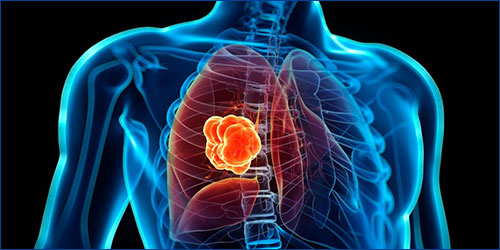
Recent years have brought revolutionary innovations in lung cancer treatment. A group of biological drugs called checkpoint inhibitors—monoclonal antibodies—in other words, IMMUNOTHERAPY, has become an important part of lung cancer treatment.
These drugs activate fighter cells (T lymphocytes) in the immune system, causing them to attack the tumor. They do this either by binding to the PD-1 receptor on T lymphocytes (Anti-PD-1 blockers = pembrolizumab and nivolumab) or by binding to the PDL-1 receptor on tumor cells (Anti-PDL-1 blockers = durvalumab and atezolizumab).
Unlike chemotherapy, immunotherapy drugs have less frequent and milder side effects. Side effects such as hair loss, weakened immune system, and nausea are not observed. The most common side effects are mild fatigue and loss of appetite. Serious side effects are very rare, and these almost never lead to death. Less frequently than %5, an immune reaction, where T lymphocytes become excessively active and migrate to normal tissues, can cause problems in the lungs, liver, intestines, and thyroid gland. Very rarely, this type of side effect can also occur in the brain. These side effects almost always disappear with oral cortisone-type medications.
Immunotherapy doesn't work for every patient. Studies are ongoing to identify markers that show which patients it works best for. Currently, it is more likely to be effective in patients whose tumors show PDL-1 via immunostaining, in patients with a high genetic mutation burden in the tumor, and in cases of rare genetic abnormalities in the tumor, known as MSI. Today, pembrolizumab in combination with chemotherapy is accepted as the standard first-line treatment for all patients with advanced non-small cell lung cancer without the need for additional analysis. In stage III tumors, the use of durvalumab after combined chemotherapy and radiotherapy significantly prolongs survival and increases the chance of remission.
The latest study showed that using two cycles of chemotherapy together with two drugs, Ipilimumab and Nivolumab, resulted in the highest and longest-lasting treatment response observed to date in lung cancer.
The uses of these drugs are expanding every day. Studies are ongoing on their use in the early stages before surgery, and as maintenance therapy after the completion of chemotherapy.
Another important characteristic is that, if they are effective, they can show their effects for a long time, sometimes for years.
Yine de bu ilaçlara akciğer kanserinin mucizevi çözümü olarak bakmak doğru olmaz. Kısıtlı sayıda hastaya (%20- kemoterapi ile beraber %80’e kadar)iyi geliyorlar. Nadiren de olsa ciddi yan etkileri olabilir. Bu ilaçların dneyimli onkoloji uzmanları tarafından uygulanması gerekiyor. Ve ülkemiz için çok önemli olan bir husus bu ilaçların son derece pahalı olması (Üç haftada bir 15-25.000 TL). Ayrıca ne kadar sure devam edilmesi konusunda bir görüş birliği yok.
However, these immunotherapy drugs are currently the most exciting and promising drugs since the beginning of cancer treatment.