
Click here to go to the link.
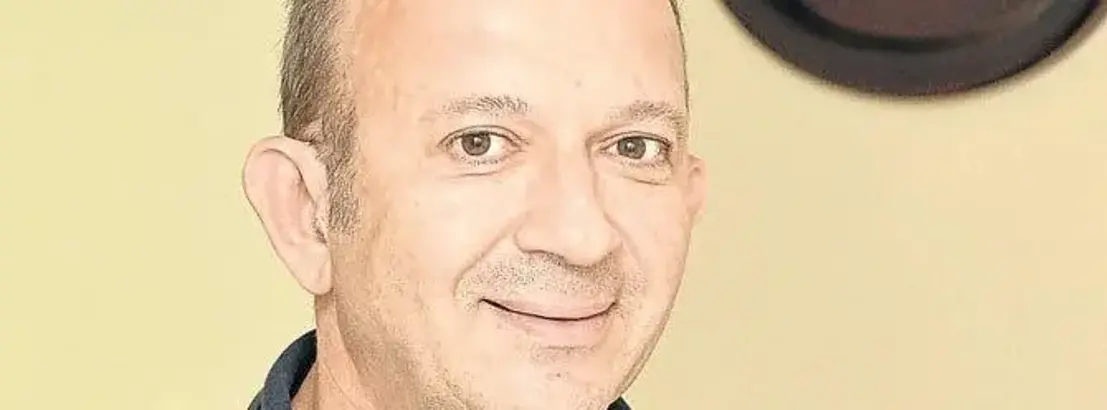
Dr. Sualp Tansarı is a prominent figure in the fight against cancer, not only in Turkey but worldwide. Born in Istanbul in 1959, the renowned oncologist comes from a family of Circassian origin. His father, Aydın Tansan, who is no longer alive, was a former president of the Turkish Pharmacists Association and the Student Union. Dr. Sualp Tansarı attended Kadıköy Maarif College as a boarding student and then continued his education at Istanbul University Faculty of Medicine. After graduating and completing his compulsory service, he went to Boston, one of the most advanced cities in the US in the field of medicine, where he served as the Director of the Chemotherapy Clinic and the Coordinator of Advanced Specialty Training at Boston University. He became the oncologist who saw the most patients at the hospital and received awards. In 1995, he returned to Turkey and established his own clinic. Today, he is one of the few names preferred for treatment not only by Turkey's most important figures but also by patients from abroad. When I went to his clinic to conduct the interview, which he had reluctantly agreed to, I was met by someone full of energy, briskly shuttling between rooms in his sneakers. The idea that he was overly serious and grumpy was completely false. I met someone who was extremely cheerful, and who explained that as he matured, he was overflowing with love not only for those close to him but for everyone.
The name "cancer" is more frightening than the disease itself. Even young children are now growing up knowing about this disease, and even fearing it. Are we justified in being so afraid?
Firstly, we know very little about cancer. Our lack of awareness, superstitions, etc., create this fear. Without knowing exactly what cancer is, it's impossible for us to correctly understand what is being said about it.
How about you describe cancer in the most accurate way possible?
This is a process that occurs when a cell in our body goes out of control, growing and multiplying instead of performing its intended function. The cells that make up organs have two functions. The first is to perform the function of that organ. This is controlled by a system called genes in the cell nucleus. If these cells grow and multiply uncontrollably, the resulting condition is called cancer.
How does it become deadly?
When these growing and multiplying cells reach a size of one millimeter, the body tells them, "Stop, you're foreign, I won't give you nutrients." Then, cancerous cells secrete certain substances that trick normal blood vessels into building vessels for them. These healthy cells are deceived and create artificial vessels for the tumors, different from real vessels. And the tumor cells connect these vessels to normal vessels and continue to receive nutrients. In addition, thanks to these vessels, they travel to other organs, forming tumors and occupying space, preventing those organs from performing their functions and leading to death.
“"There have been huge advances in cancer treatment."”
Where are we in the fight against cancer?
The goal today is either to prevent the formation of blood vessels that feed these cancerous cells and allow them to spread throughout the body, or to activate the immune system to destroy the cancerous cells.
Next-generation smart drugs are working towards achieving this, and they are succeeding. What other methods are on the way that we don't yet know about but will soon begin to use?
When we talk about chemotherapy drugs, we're referring to the drugs we've been using since 1970. There are some innovations in these drugs, but their biggest problem is that they damage every cell that grows and multiplies rapidly. This includes hair cells, bone marrow cells… However, cancerous cells cannot regenerate or repair themselves after being damaged. Therefore, these drugs are administered at certain intervals to give the damaged healthy cells in the body a chance to regenerate. But it's difficult to eradicate cancer this way. Resistant cancer cells inevitably emerge, and the disease continues. That's why in recent years, biological therapies, treatments that target the characteristics that distinguish cancer from normal tissues, have come to the forefront. These new drugs, developed according to genetic differences and the organ where the disease is located, are yielding extremely good results. It's a completely targeted therapy.
Individualization is becoming increasingly important in medicine. Is the focus shifting towards personalized treatment in cancer as well?
Exactly. Firstly, we talked about targeted therapy, and secondly, it's definitely personalized treatment tailored to the individual's specific cancer. Everyone's cancer is biologically different, even if it's the same type! We're already moving away from the categorized case definitions that have existed until now. Genetic and biological characteristics specific to each individual are becoming more decisive at this point. A different drug will be given to each target, and in this way, the patient will be cured through a multifaceted treatment.
To my knowledge, you apply this type of treatment to your patients?
That era has already begun. And we are rapidly applying these new methods and getting very good results. The molecular profile of the tumor is being determined. Unfortunately, this can only be done abroad yet.
Are you in contact with centers abroad and are you using this opportunity for your patients?
Of course, a lot. Some classic genes are also examined here. Thanks to this molecular profile, we can understand how a person's cancer will respond to different drugs. It's not 100%, but it yields results to a great extent. Even in seemingly hopeless cases, we see the possibility of long-term survival with this kind of approach. New generation drugs are now providing things we couldn't even imagine before. And moreover, there are drugs whose research is complete and which have just entered use, and we will be able to use them very soon.
Knowing how to use these medications correctly seems to be the most important aspect of the treatment?
Of course, it's necessary to follow up. It's necessary to know and learn. Even the preparation of these medications is specialized. Oncologists in our country go to international conferences, they follow the developments, there's no problem there, but the problem is that there aren't enough oncologists in Türkiye!
When cancer poses such a threat to our future?
Yes, exactly, and a very serious problem awaits us all in the coming years. Because as these drugs become more complex, there is a need for many oncologists who know this field very well. But we are not training new oncologists. If we started now, it would take 10 years. And that means that cancer treatment in Türkiye will be inadequate for the next 10 years. There are just over 100 oncologists working. If I say that in America there are this many oncologists per million population, I think I will have conveyed the gravity of the situation. This is an emergency, something needs to be done immediately!
I know you have this desire. You want to train new oncologists, but you're not allowed?
I've been saying this for 18 years, but I'm not allowed to employ oncologists because I'm not an academic institution. I try my best to communicate with my fellow oncologists and share my knowledge, but this can't go on like this!
Anyone trying to find a good oncologist knows there are very few in this country. Those who can afford it reach them, but what about those who can't?
We try to help them as much as we can. But as I said, I have a limit to the number of patients I can see in a day. Taking on more patients would mean I wouldn't be able to do my job properly.
How do you admit patients? Do you treat everyone who knocks on your door?
We undertake the treatment if we believe we can truly help that patient.
They say about you, 'He's a very good doctor, but if you fall into his hands, he'll ruin you. He uses very harsh treatments!'
We apply the newest and most advanced treatments available. These treatments are extremely effective and gentle. You won't see a single patient in a terrible state here. On the contrary, the patient's quality of life is absolutely not affected. In the past, people used to say I was "applying experimental treatments." But according to those who said that, it was experimental. We apply the latest treatments accepted by science. All of these treatments have been put into normal use in the places where they were developed and have undergone the necessary research.
What will happen regarding access to next-generation cancer drugs?
Unlike other countries, in Türkiye the government procures cancer drugs at very good prices and makes them available to citizens. This is a significant achievement, but it's impossible for it to continue like this. The new generation of drugs that are on the way are very, very expensive.
Do you think we might one day be able to get a cancer vaccine, just like the other vaccines we received in childhood?
Hopefully. A vaccine might be possible, but preventive methods will definitely be developed! Cancer is a very complex disease. In the future, after determining its molecular profile, different methods combining many treatments will be followed depending on the situation. Patients will live with cancer as a disease that is kept under control.
“"If I had cancer, I would entrust my treatment to someone I trust and monitor the progress."”
You pay attention to your diet, you get your checkups, but you also have a family history of cancer. Have you ever thought about what you would do if, one day during one of those checkups, you were told you have cancer?
Of course, after working with death for so many years, one needs to come to terms with it. Actually, everyone should. Death is as natural as birth. But in our society, there's a greater reaction and fear of death than anywhere else. If you don't come to terms with death, it's psychologically impossible to work as an oncologist. You'll go crazy. I've read religious books on this subject, researched, thought about it, and finally come to a conclusion. There's no need to fear death because no one knows what happens afterward. The important thing is to live a quality life and leave this world without pain or suffering, like a sweet treat!
So, I'll ask again: what would you do if you had cancer?
I entrust myself to someone I trust. Of course, since I'm very involved in things myself, I follow the situation without being too arrogant. The rest is up to God…
What do you think might be the reason why Turks cannot make peace with death?
Certainly, many factors are at play. There's uncertainty, there's the fear of hell. But I think the biggest factor is the fact that life here hasn't been lived well and as desired. Missing out on things, regrets… When faced with this situation, they think, 'I haven't lived anything truly worthwhile yet!' But if we could understand Islam properly, we would understand that there's no need to fear. We need to live a righteous life in this world.
One of the most important issues in cancer treatment is the patient's psychological state. When talking to a patient, do you try to understand them and speak according to their psychological state?
I'm not a psychiatrist, but the biggest problem in Türkiye is the attempt by relatives to hide the truth from the patient. And this doesn't change depending on intellectual level. Some patients want to know everything, while others only ask as many questions as they want to know. I am absolutely against lying to patients. For example, Americans tell patients the situation as it is, whether they want to hear it or not. This might not be entirely accurate either. Many patients actually know the situation but don't want to learn too much. We need to respect that too.
“"Quit smoking and get some sleep at night!"”
What are your thoughts on the link between cancer and nutrition?
In your opinion, what are the things we absolutely must do and absolutely must not do to avoid cancer? 'Eat this and you won't get cancer, or don't eat that and you'll get cancer!' After all these years, I think to myself; there's no such thing!
Even cigarettes?
No, of course not, the harm of smoking is very obvious. I always say, from the moment it enters the body, the smoke travels throughout and leaves, damaging everything! Are there many people who smoke and don't get cancer? Yes, about twenty percent of the population has a more resistant body structure to smoking. But even they have to fight other serious lung diseases related to smoking. Returning to cancer; we now know that nothing directly causes cancer or has any preventative power.
You recommend vitamin D, but…
Yes, that's very important. We used to think that people in Africa got cancer less often because they ate greens and didn't live stressful lives. It's now known that this isn't the case. Their vitamin D levels are very high due to the sun. Conversely, as you move towards Scandinavian countries, the incidence of cancer increases significantly. This is because there is no sun there. The reason for this was recently understood. If vitamin D levels are high in the body, it blocks the path of cells that are about to become cancerous and prevents cancer.
What is the best way to get vitamin D?
The sun isn't what it used to be; it's harmful now. That's why I never recommend going out in direct sunlight. My advice is this: If you don't frequently pass kidney stones, put one ampoule of vitamin D in a tablespoon of olive oil every month. You drink half, and a loved one drinks the other half. Doing this once a month is enough, and it's incredibly cheap. Vitamin D has a protective effect against infections and cancer. Even the risk of Alzheimer's is related to vitamin D. Because vitamin D is so cheap, it's an orphaned substance. Nobody profits from it, so even though its benefits are known, it's not particularly recommended. The researchers who conducted the studies on vitamin D are Russians. We learned about their research results by translating them!
“"Sugar is the cause of many diseases."”
It is said that smokers should not obtain vitamins A, E, and C through unnatural means?
That's completely unrelated. Smokers may have a vitamin C deficiency, but it's not known what that leads to. But it's best to get your vitamin C through natural sources.
Sugar is seen as equivalent to poison. And you say you absolutely don't use it. Is it really that bad? How are families supposed to keep young children away from it?
Sugar is very, very harmful. It might be more acceptable for young children who have a very high growth rate and need energy, but as they reach adolescence, it's necessary to educate them and help them break this habit. Otherwise, obesity will be one of the biggest problems in the world.
Is this the harmful aspect of sugar, or is it harmful because of its direct link to cancer?
Obese people already have a high risk of cancer. Sugar is a substance that lays the groundwork for all kinds of diseases. Humanity didn't use such a substance until recently. It's been in our lives for 500 years. There's now a reaction in the human body against wheat as well. It should be used in limited quantities. But the main thing is sugar! It absolutely must be cut out. I convinced my 12-year-old daughter not to use it anymore.
Is there really no sugary food you can't resist?
Look, nothing is absolutely forbidden. If you really crave something, of course you'll try it. But in reasonable amounts and not too often. I believe in the Paleo Diet. People don't need to walk around with lists. The basic thing is: what was there, what was eaten thousands of years ago? Meat, fresh vegetables, fresh fruit. Nothing else! Everything canned or packaged is harmful.
The safety of fresh food is also questionable…
Yes, we have this problem. The pesticides used to grow these vegetables are extremely harmful to health. I have an olive grove with a 40-square-meter stone hut. I personally take care of it and, for example, I use a special solution developed by a Japanese person for olives. It kills all the harmful things and is not harmful to health. It's also very cheap. Such solutions should be used. By the way, we must definitely increase olive oil consumption. It is beneficial for everything and has a preventative effect against many diseases.
How much does sleep affect the immune system?
You absolutely need to sleep 7 hours. Night sleep is very important for health. For example, people who work at night have a higher risk of cancer.
“"Life is too long to do just one thing!"”
How do you live?
I love being alone in nature the most. I prefer living with my family, avoiding crowds. I can stay for a week or two in very primitive conditions somewhere by the sea. I also love being out on the sea; I do serious long-distance sailing, it's very relaxing. I've developed an interest in photography. Now I really want to learn about olive cultivation; I love olives. Life is too long to do only one job. A person needs to do other things that interest and bring them joy. During the week, I have a routine life.
What do you do in a typical day?
I leave home around 9 in the morning, visit hospitals, and then come here. I don't work late into the night. Most of the time, I go out to see my daughter. She lives nearby. I spend time with her. I also have a 2.5-year-old son; I play with him, kiss and cuddle my children. I also love reading at night, but I sleep at least 9 hours. I don't feel the need to socialize much.
I've always wondered. When you go somewhere, everyone must want to ask you questions. How do you cope with that?
I've gotten used to it by now, but I haven't been put in a situation where I'd say, "Enough is enough." They're probably a little hesitant... But I'm an extremely sociable and friendly person when you get to know me. I have absolutely no ego! This job is the best way to tame your ego. The moment you say, "Oh, I'm such a great doctor," your patients might leave, and you'll be left speechless!
This ego issue seems to be more prevalent among surgeons, I guess?
Yes, they definitely can't get over that feeling! Every day I'm reminded of how insignificant I am in the world, like a grain of rice. Every day God is disciplining me. This doesn't tolerate pride.
What kind of retirement do you envision for yourself?
I want to be in nature, by the sea. But my connection to this work will always continue. Because it's now an organic part of my life. I follow developments very closely every day and I'm sure I'll never give it up.